In the world of LED display technology, three terms dominate the conversation: COB, SMD, and GOB. While they all drive stunning visuals, the way they are built, protected, and maintained makes each one unique — and better suited for specific applications.
Here’s your clear, side‑by‑side guide from the team at ATMOZ LED.
What They Mean
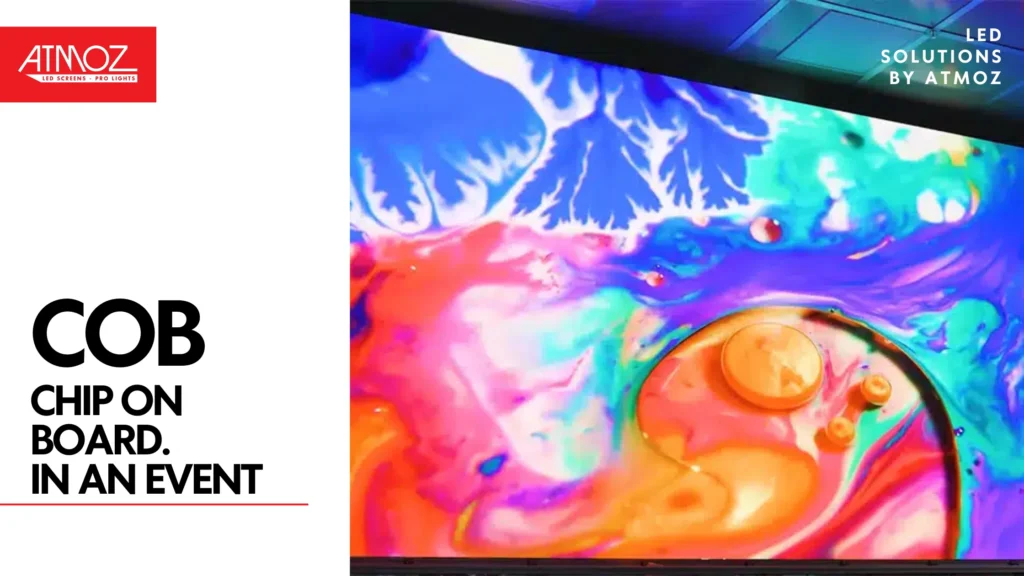
COB — Chip on Board
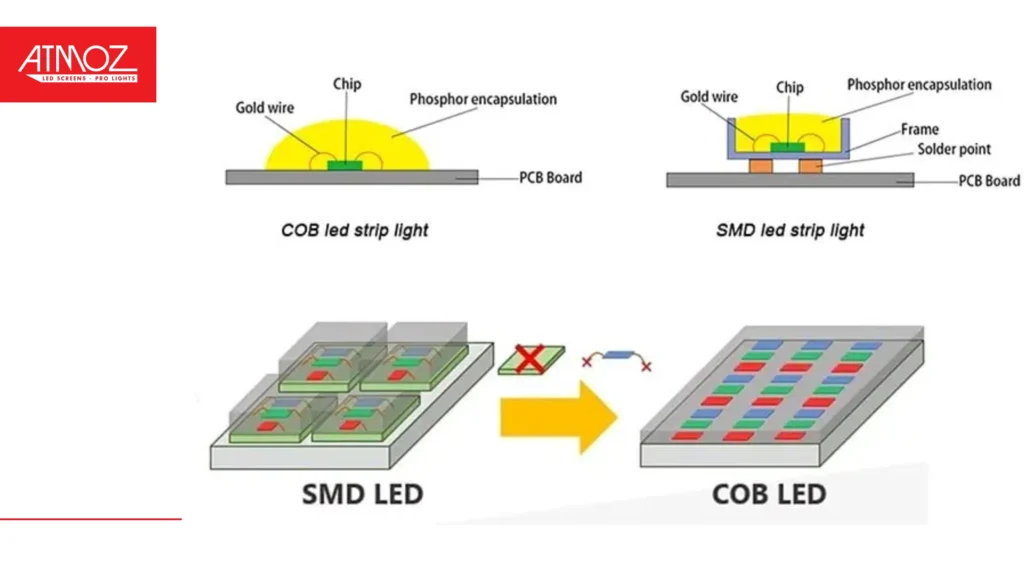
LED chips are mounted directly onto the PCB (printed circuit board).
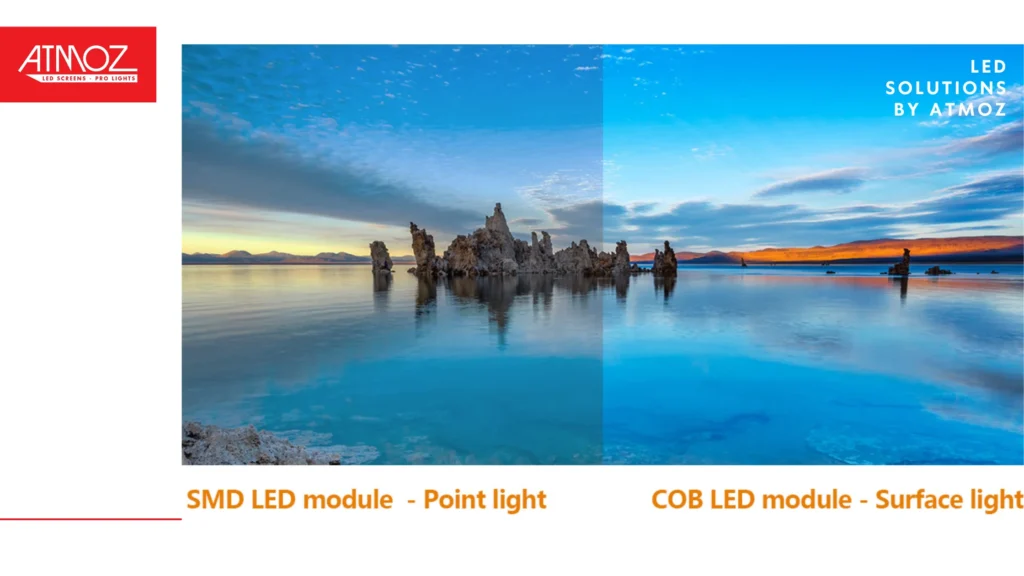
No traditional lamp bead housing; the chip is fully encapsulated in transparent resin.
Result: Flat, smooth display surface with no visible pixel grain.
SMD — Surface Mounted Device
The most common LED packaging method today.
LED lamp beads are soldered onto the PCB surface, then connected via reflow soldering.
Result: High brightness, wide viewing angles, easy to produce — but the lamp beads are exposed.
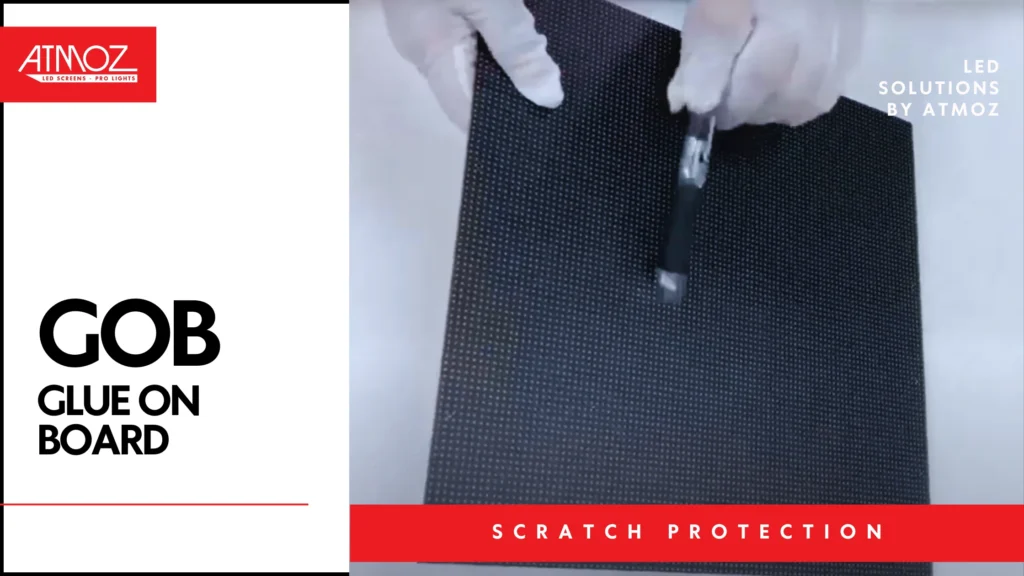
GOB — Glue on Board
Starts as SMD LEDs but adds a transparent resin coating over the front.
This seals and protects the LEDs from moisture, dust, and impact.
Result: Durability boost without changing the visual quality of SMD LEDs.
COB Technology at a Glance
How It’s Made: Chip bonding → Wire bonding → Fluorescent coating → Full resin encapsulation.
Key Traits:
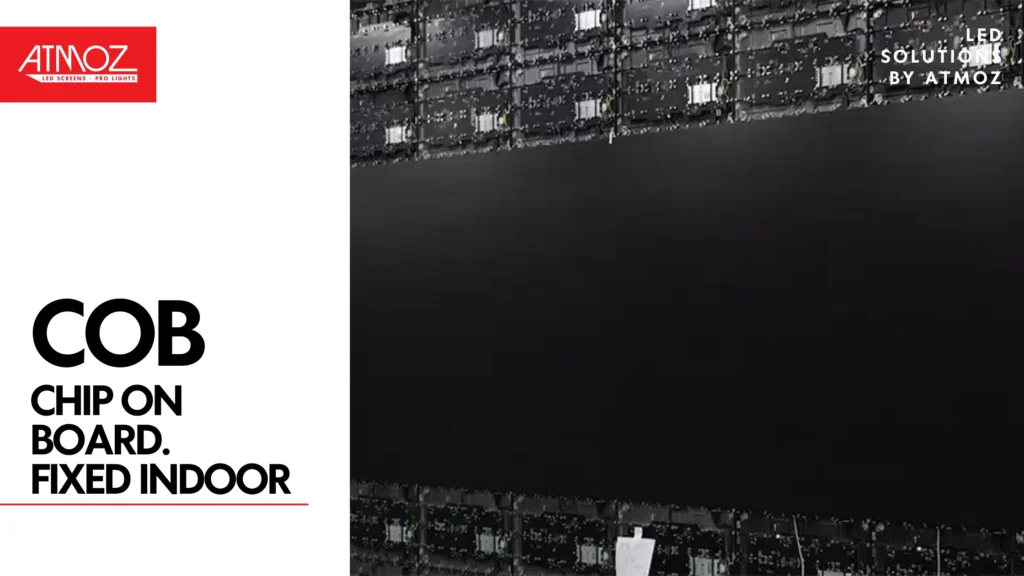
No exposed lamp beads.
Seamless surface — feels like a single solid screen.
Ultra‑high pixel density possible (even P0.4mm pitch).
COB LED — Advantages
Extreme Reliability – No risk of pixel beads falling off; IP68 protection against water & dust.
Ultra‑Fine Pixel Pitch – Perfect for 4K/8K displays and control rooms.
Professional Imaging – Medical (DICOM), aerospace, mission‑critical monitoring.
Virtual Production – XR stages, cinematic LED backdrops.
Special Environments – Ships, mines, and industrial monitoring.
Where GOB Fits In
Think of GOB as a protective upgrade for traditional SMD LEDs:
Shields from dust, moisture, and impact.
Extends lifespan for rental and outdoor displays.
Ideal for small‑pixel‑pitch SMD in high‑traffic or rugged environments.
SMD vs. COB vs. GOB — Quick Comparison
Feature
SMD
COB
GOB
Pixel Protection
❌ Exposed
✅ Encapsulated
✅ Resin coated
Pixel Pitch
P1.2+
P0.4+
P1.2+
Durability
Moderate
Extreme
High
Brightness
Very High
Moderate
High
Maintenance
Easy
Complex
Easy
Cost
Low–Medium
High
Medium
ATMOZ LED Recommendation
COB – Choose for premium indoor, ultra‑fine pitch, or mission‑critical visual work.
SMD + GOB – Best for rental, outdoor, and all‑weather use.
Standard SMD – Ideal for cost‑effective, high‑brightness projects without heavy handling.
At ATMOZ LED, we match the right LED technology to your application, budget, and durability needs. Whether you need the bulletproof reliability of COB, the rugged protection of GOB, or the brightness flexibility of SMD, we deliver a solution that’s built to perform, built to last.


Add a review
Your email address will not be published. Required fields are marked *